Welcoming Advent: A Season of Hopeful Waiting
As we begin the liturgical year on this First Sunday of Advent, November 30, 2025, the Church invites us to enter a sacred time of preparation. The word "Advent" derives from the Latin adventus, meaning "coming," "arrival," or "presence." In ancient Roman usage, it described the official visit of a king or emperor to a province, often marked by celebration and reverence. Early Christians adapted this term to signify Christ's threefold coming: His historical incarnation at Bethlehem, His ongoing spiritual presence in the Eucharist and grace, and His glorious return at the end of time, the Parousia. This etymology captures the season's essence: not mere anticipation, but an active encounter with the divine King who draws near.
Historically, Advent emerged in the Western Church by the fourth century as a period of preparation for Christmas, the feast of Christ's Nativity established around 336 AD. Initially, it may have been a longer fast resembling Lent, beginning as early as November 11 or even the autumn equinox, with synods like that of Mâcon in 581 prescribing Lenten-like observances on certain days. By the ninth century, it stabilized at four Sundays, starting the nearest to St. Andrew's feast on November 30, as formalized under Pope St. Gregory the Great (590-604). The Gelasian Sacramentary noted five Sundays initially, reduced to four by Pope St. Gregory VII (1073-85). Unlike the Greek Church, which observed it mainly as a fast from November 15 without a full liturgical cycle until later, the Roman tradition developed a rich liturgy of violet vestments, omitted Gloria, and readings from Isaiah foretelling the Messiah. Over time, it evolved from strict penitence to a "devout and expectant delight," balancing somber reflection with joyful hope, as affirmed in the 1969 Universal Norms on the Liturgical Year.
Pastoral significance lies in Advent's dual focus: commemorating Christ's humble first coming while orienting hearts to His triumphant second coming, the Parousia. As Pope Benedict XVI explained, Advent reminds us that Christ, the King who visited our "poor province" of earth, remains present in the sacraments and will return in glory to judge and renew creation. Drawing from Catholic doctrine on the Parousia—the Greek term for Christ's visible return, evoking a royal advent with judgment, resurrection, and cosmic renewal—this season urges vigilance amid daily life. Isaiah's prophecies of peace (Is 2:2-4; 11:1-10) and St. Paul's calls to alertness (1 Thess 4:16-17; 5:1-6) echo in the readings, fostering conversion and hope. Like the early Church Fathers, who saw the Parousia as imminent yet mercifully delayed for repentance, Advent trains us to recognize Christ's "intermediate" coming in our souls today, bridging history and eternity. It counters modern distractions, inviting us to see events as signs of God's love, preparing for the Kingdom where "new heavens and a new earth" dawn (Rev 21:1).
In this Advent, let us embrace the Maranatha prayer—"Come, Lord Jesus!"—through prayer, fasting, and acts of charity. Confess sins, attend the Eucharist devoutly, and ponder the Parousia's promise of justice and peace. As seeds rest in winter soil awaiting spring, may our hearts germinate in faith, ready to welcome Christ anew. Vigilant and joyful, we hasten His Kingdom in our world.
Fr. Stephen Syambi
#Soldier of Christ
Tue 02, Dec 2025 08:12 am
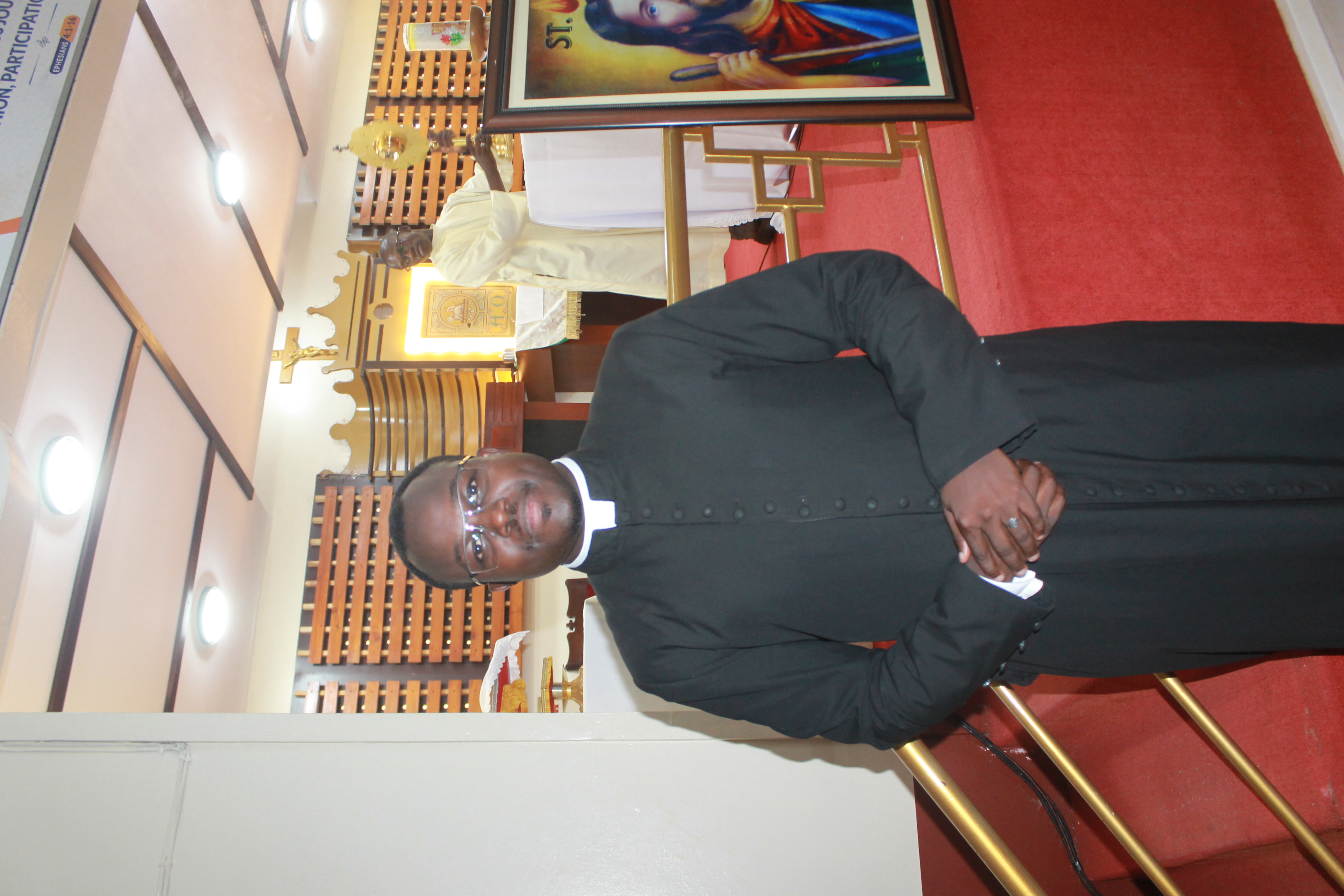 Fr. Stephen Syambi - Assistant Parish Priest