(To all members of Naggulu Parish Council;)
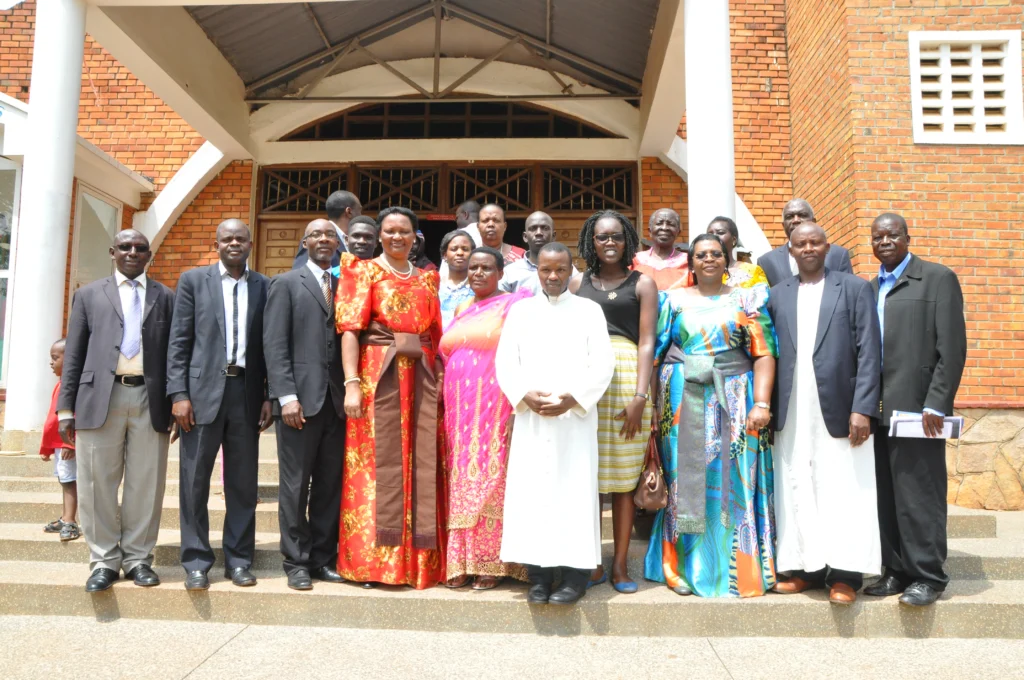
Beloved parish councilors, before I go any further, I would like, superfluous as it may seem, to very briefly remind you of the Catholic Church organizational structure.
It all begins with our Lord. When Jesus Christ started his Mission on earth, he announced: “The time is fulfilled, and the kingdom of God is at hand; repent and believe in the gospel (Mk 1:15).” Some three years later, just before his ascension, he commissioned the eleven apostles with the following words: “All authority in heaven and on earth has been given to me. Therefore go and make disciples of all nations, baptizing them in the name of the Father and of the Son and of the Holy Spirit, and teaching them to obey everything I have commanded you. And surely I am with you always, to the very end of the age (Mt 28:16-20).”
On Pentecost day, filled with the Holy Spirit, the apostles went out among the people and began spreading Jesus’ message, thus establishing the beginning of the Church.
As the church spread and grew, the Apostles appointed ministers to assist them and some of them to be their successors, these are called Bishops. They are gathered around the Pope and share with him the responsibility for the governance of the universal Church.
Once a Bishop is ordained, he is assigned to a Diocese and every Diocese is in turn divided into geographical areas or communities which we all know as parishes.
A Bishop cannot be in all the parishes, he therefore ordains priests and commissions some of them as Parish Priests to represent him in the parishes.
We can refer to a Parish as: (i) a group of Christians called together by God through Baptism to share in the mission of Jesus; or (ii) Eucharistic people gathered with the leadership of the Parish Priest.
Brothers and sisters, members of the parish council, bear with me as we continue to walk along this seemingly unnecessary path. Though to some of you this may seem to be a diversion from my message to you, don’t get bored. My intention is to leave no one behind. I know that some of you have not had the opportunity to put things together so as to see where your role and responsibility as parish councilors come from. That’s the group this ‘diversion’ is for.
So, by virtue of our baptism, all of us making up the parish community, are called upon to share with the Parish Priest and his assistants, the responsibility of spreading and strengthening the kingdom of God on earth. Now, to regularly and systematically gather the entire parish community and draw up plans for effecting the mission Jesus Christ entrusted to the church, is not only unpractical but also next to impossible. Hence the need for organizational structures of collaboration. That’s where the parish council comes in.
It is out of necessity to form an intermediary group representing and is in contact with the parishioners. This group, called the Parish Council, plans with the Parish Priest for the fulfillment of the mission of the church in that particular parish and beyond. Parish Councilors must never forget that they have been called by God and that their parish is part of a diocese which is part of an Episcopal conference and ultimately under the Holy Father.
Let me here point out to you councilors, that since the Parish Priest is the representative of the Bishop in the Parish, and his role in the life and development of the parish is central, his involvement in the work of the parish council is essential. Parish Council decisions must have his approval. According to Canon 536, he is to preside over the Parish Council during meetings. [In Kampala Archdiocese, however, the Parish Priest delegates the role of chairing the meetings to the leader of the laity (Ssaabakristu) while he as head of the parish, guides the meeting and has the last word on any decision taken in the meeting.]
TO BE CONTINUED.
Keep reading
Related News
 From Lent to Resurrection: A Message of Faith, Charity and Unity
As we celebrate the joy of the Resurrection of our Lord Jesus Christ, I extend my heartfelt gratitude to each one of you, our parishioners, friends of Naggulu, and devotees of St. Jude Thaddeus, for your dedication, faith, and perseverance throughout the Lenten season.
 The Tomb Could Not Hold Him
Alleluia! Christ is risen! He is risen indeed! On this glorious Easter Solemnity, the Church bursts forth with joy: the tomb is empty, death is conquered, and new life dawns for all. (Matt 28:1-10) As Mary Magdalene raced to the apostles, crying, "They have taken the Lord out of the tomb," so we too run to proclaim the miracle that shattered the grave's silence. (John 20:1-9) The stone rolled away not by human hands, but by divine power, reveals the Risen Lord who calls us to believe without seeing.
 Easter Hope: Overcoming Fear through the Resurrection
“Do not be afraid.” Let us open our hearts to Christ, who is the source of true joy and lasting hope. Easter invites us to overcome fear and place our trust in the resurrection of Jesus Christ. In Him we discover the answer to the deepest longing of the human heart, the desire for happiness, meaning, and fulfillment in life.