Kampala Archdiocesan Day: Some facts about the Diocese
Kampala is the result of territorial changes:
Victoria Nyanza Vicariate (1883)
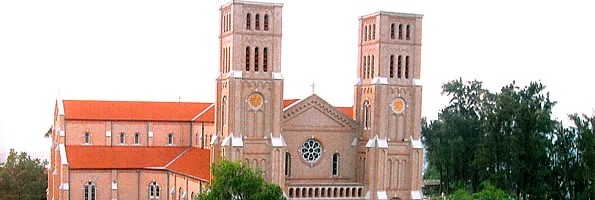
The Vicariate Apostolic Victoria Nyanza was established by the Holy See in 1883 and was entrusted to the Missionaries of Africa commonly known as the White Fathers. Lubaga became the seat of the Bishop.
Upper Nile Vicariate (1894)
On July 13, 1894, the Holy See erected the Upper Nile Vicariate dividing it from Victoria Nyanza Vicariate and entrusted it to the Mill Hill Missionaries. Nsambya became the seat of the Bishop of that Vicariate. The name of Victoria Nyanza Vicariate was also changed to Vicariate Apostolic of Northern Victoria Nyanza.
Vicariate Apostolic of Uganda (1915)
After the erection of Vicariates in territories beyond the Nile on the southern side, the name of Northern Victoria Nyanza Vicariate was changed to the Vicariate of Uganda on Janaury 15, 1915.
Vicariate of Kampala
On June 10, 1948, the name of Upper Nile Vicariate was also changed to the Vicariate of Kampala which later became the Diocese of Kampala in 1953.
Archdiocese of Rubaga (1953-1966)
The Catholic Hierarchy in Uganda was established on March 25, 1953 and the Vicariates of Uganda became the dioceses of Uganda. Lubaga became an Archdiocese with 5 suffragan dioceses namely; Gulu, Masaka, Kampala, Mbarara and Tororo. The first Archbishop of the Archdiocese of Rubaga was Archbishop Louis Joseph Cabana WF (1947-1960) who died in retirement in 1981. He was succeeded by Archbishop Dr. Joseph Kiwanuka(1960-1965)
Archdiocese of Kampala (1966-)
On August 5, 1966, the Holy See joined together a section of the Diocese of Kampala and the Archdiocese of Rubaga to create the Archdiocese of Kampala. It was covering most parts of Central Uganda. His Grace Emmanuel K. Nsubuga (later Cardinal) was consecrated on 30th October 1966 to become the first Ordinary of the newly created Archdiocese of Kampala. He was elevated to the rank of Cardinal on 24 May 1976. He retired on 8 Feb 1990 and died on 20 April 1991. He was succeeded by His Eminence Emmanuel Cardinal Wamala (1990-2006). Since then, three other new dioceses have been created namely: Kiyinda-Mityana (August 21, 1981), Kasana-Luweero (December 16, 1996) and Lugazi (December 16, 1996).
The line of succession to the See of former Rubaga Diocese (Cathedral: Lubaga)
The Rt. Revs:
Leon Livinhac, W.F. (1883-1890) Jean Hirth, W.F (1890-1894) Guillermain, W.F. (1895-1897) Henry Streicher, W.F. (1897-1933)————John Forbes, W.F. (1918-26)(Co-adjutor) Edward Michaud, W.F. (1933-1945)————James Smith, W.F. (1945-1947),(Pro-Vicar) —————————— Louis Joseph. Cabana W.F. (1947-1960)———–———————Joseph Kiwanuka, W.F. (1961-1966)
The line of succession to the See of former Kampala Diocese (Cathedral at Nsambya)
The Rt. Revs:
Henry Hanlon, MHM (1894-1911) John Biermans, MHM (1912-1924) John W Campling, MHM (1925-1937)————————————John Reesinck, MHM 1938-1947) Vincent Billington, MHM (1947-1966)
The line of succession to the See of the Archdiocese of |Kampala
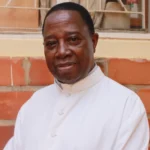
His Eminence Emmanuel Cardinal Nsubuga (1966-1990)—————His Eminence Emmanuel Cardinal Wamala (1990-2006)——————The Most Reverend Dr Cyprian Kizito Lwanga (2006-)
Additional info:
Area: 3,644 km²;
Population: 1,740,000 Catholics (41.0% of 4,242,000 total) (2014)
Suffragan Sees:, Kasana Luweero Kiyinda-Mityana, Lugazi, Masaka.
67 parishes, (2017), ( more or less 360 priests (288 diocesan, 72 religious), 951 lay religious (285 brothers, 666 sisters)…..
Source: Uganda Episcopal Conference.
Keep reading
Related News
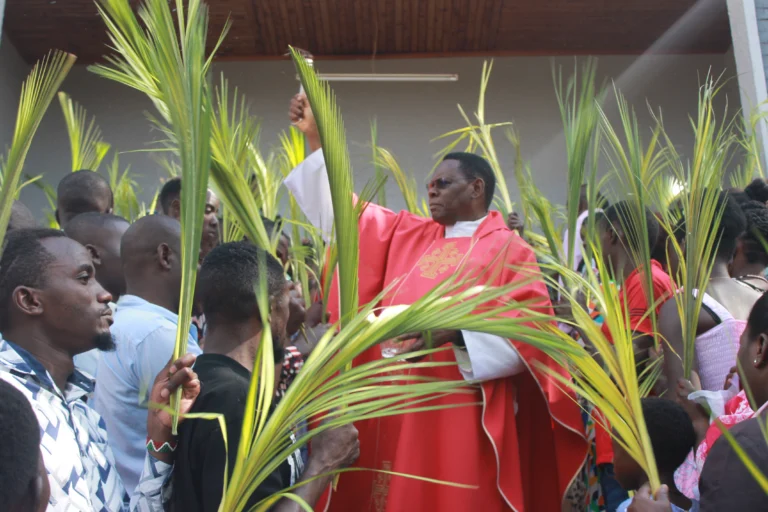 From Lent to Resurrection: A Message of Faith, Charity and Unity
As we celebrate the joy of the Resurrection of our Lord Jesus Christ, I extend my heartfelt gratitude to each one of you, our parishioners, friends of Naggulu, and devotees of St. Jude Thaddeus, for your dedication, faith, and perseverance throughout the Lenten season.
 The Tomb Could Not Hold Him
Alleluia! Christ is risen! He is risen indeed! On this glorious Easter Solemnity, the Church bursts forth with joy: the tomb is empty, death is conquered, and new life dawns for all. (Matt 28:1-10) As Mary Magdalene raced to the apostles, crying, "They have taken the Lord out of the tomb," so we too run to proclaim the miracle that shattered the grave's silence. (John 20:1-9) The stone rolled away not by human hands, but by divine power, reveals the Risen Lord who calls us to believe without seeing.
 Easter Hope: Overcoming Fear through the Resurrection
“Do not be afraid.” Let us open our hearts to Christ, who is the source of true joy and lasting hope. Easter invites us to overcome fear and place our trust in the resurrection of Jesus Christ. In Him we discover the answer to the deepest longing of the human heart, the desire for happiness, meaning, and fulfillment in life.